
The Orchestra Analogy: Why HIL Testing Matters
Think of a product development process as an orchestra. Each instrument (software, sensors, control units, or mechanical parts) must play in perfect harmony. In reality, it’s nearly impossible to have all instruments ready early in the process. That’s where HIL steps in — simulating missing instruments while allowing the real ones to perform in sync. This setup provides developers with instant feedback on how a real component interacts within a virtual environment. Whether it’s an automotive Electronic Control Unit (ECU) or an aircraft’s hydraulic control, HIL ensures that real-world conditions are mirrored as closely as possible. For learners exploring advanced testing and validation techniques, enrolling in a software testing course in Pune provides the perfect foundation to understand how virtual and physical systems blend seamlessly in real-world projects.How HIL Works: The Fusion of Virtual and Real
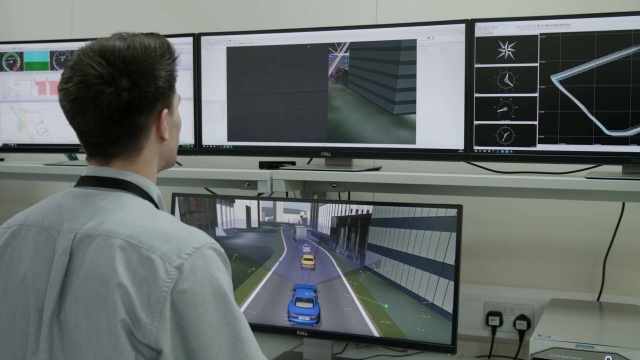
HIL testing replaces parts of a physical system with software simulations that mimic their behaviour. For example, in an automobile braking system, the physical brake controller might be tested within a virtual vehicle model running in real time. The process involves three critical components:- The Real-Time Simulator: Mimics the environment and connected systems.
- The Hardware Component: The actual device under test, like a sensor or microcontroller.
- The Interface: Connects real hardware signals to virtual ones, ensuring proper communication.
Advantages of HIL Testing: Efficiency Meets Accuracy
The true power of HIL lies in its ability to combine realism with control. It enables iterative, fast, and safe experimentation.- Cost Reduction: Physical prototypes are expensive and time-consuming to build. Simulated environments help reduce costs by validating hardware performance early.
- Enhanced Safety: Critical systems like aircraft controls, automotive brakes, and medical devices can be tested in extreme virtual conditions — scenarios too dangerous to reproduce in real life.
- Faster Time to Market: Engineers can run hundreds of tests daily using automated frameworks, accelerating product delivery cycles.
- Scalability: HIL allows continuous testing as the design evolves, ensuring every change is validated instantly.
Applications Across Industries
HIL testing isn’t limited to one domain — its versatility spans multiple sectors:- Automotive: Validating engine control systems, ADAS (Advanced Driver Assistance Systems), and electric vehicle components.
- Aerospace: Testing flight control software without risking real aircraft.
- Energy Systems: Simulating power converters, grids, and renewable energy controls.
- Industrial Automation: Verifying robotics and control logic before deployment.
Challenges in Implementing HIL
While HIL offers immense potential, implementing it effectively requires precision. Some challenges include:- Complex Setup: Integrating physical and simulated systems demands robust calibration.
- Latency Issues: Real-time synchronisation must be flawless to maintain accuracy.
- Hardware Limitations: The fidelity of results depends on how well the hardware interfaces with virtual models.
