
What changes decision quality?
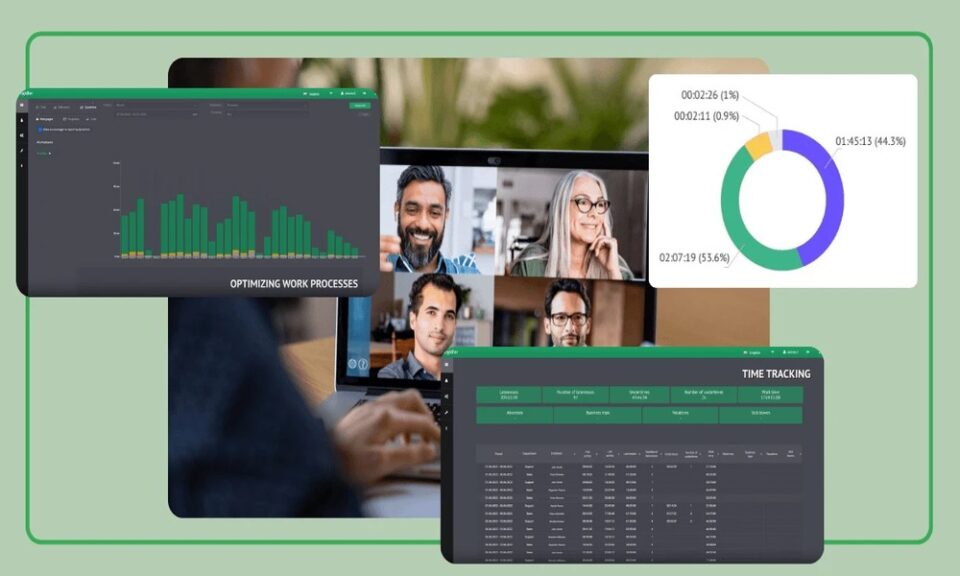
Management decisions made on incomplete or unreliable information compound over time. Using impressions, recent memory, and selective observation to judge team performance has gaps that become obvious when the outcome is already locked in. empmonitor changes this by providing managers with structured, continuous data on work time, effort concentrations, and output patterns. That record does not replace managerial judgment. Insight is far more reliable than instinct alone.
- Workload visibility – Managers see which staff are carrying disproportionate task loads before burnout or missed outputs occur.
- Pattern recognition – Recurring idle periods, output dips, or schedule irregularities surface in reports rather than through complaint or observation.
- Objective baselines – Performance conversations begin from shared data rather than from a manager’s recent impressions of an individual’s contribution.
Does data replace guesswork?
Most managers without monitoring data default to instinct when assessing performance or workload balance. That instinct is not unreliable by nature, but it is necessarily limited to what is directly visible to them. Remote and hybrid teams removed physical visibility entirely, leaving instinct operating considerably less than before. Experience alone cannot cover blind spots, but monitoring can correct them. It’s easier for managers to react when a team member consistently produces less or more output during certain hours than when relying on impressions. Data-informed decisions are not automatically better, but they are better grounded.
Performance review accuracy
Performance reviews become more reliable and less contentious when monitoring data provides the reference point. Without it, appraisals draw from memory, from the latest weeks of visible performance, and from whatever documentation individual managers maintain. That basis is uneven and disputed. When activity records, output trends, and project data cover the full review period, both manager and employee work from the same documented history rather than from competing recollections of the same period.
- Review accuracy – Appraisals reflect actual output across the full period rather than a manager’s memory of recent performance.
- Dispute reduction – Data-grounded reviews leave less room for disagreement over what was or was not delivered.
- Development clarity – Gaps visible in monitoring data point toward specific development needs rather than generalised feedback.
Resource allocation decisions
Resource allocation decisions, particularly where workload is unevenly distributed across a team, benefit directly from monitoring data. A manager working from activity records and output data can see where capacity exists and is exhausted. This is before either condition surfaces through complaints or missed deadlines. Staff who are consistently overloaded but not vocal about it carry the pattern in their data across weeks. When a manager relies on direct communication alone, available capacity that goes unused appears in the same reports. Decisions about project assignment, team restructuring, or hiring needs become considerably more precise when grounded in actual utilisation figures. This is more accurate than estimates built from conversation alone.
Data-informed resource management results in better-balanced teams, fewer quiet attritions driven by sustained and unacknowledged overload, and easier management of structural change. Monitoring software does not improve managerial judgment on its own. What it removes is the information gap that prevents sound judgment from translating into consistently good decisions, week after week. This is across a team that may never share the same physical workspace at the same time.
